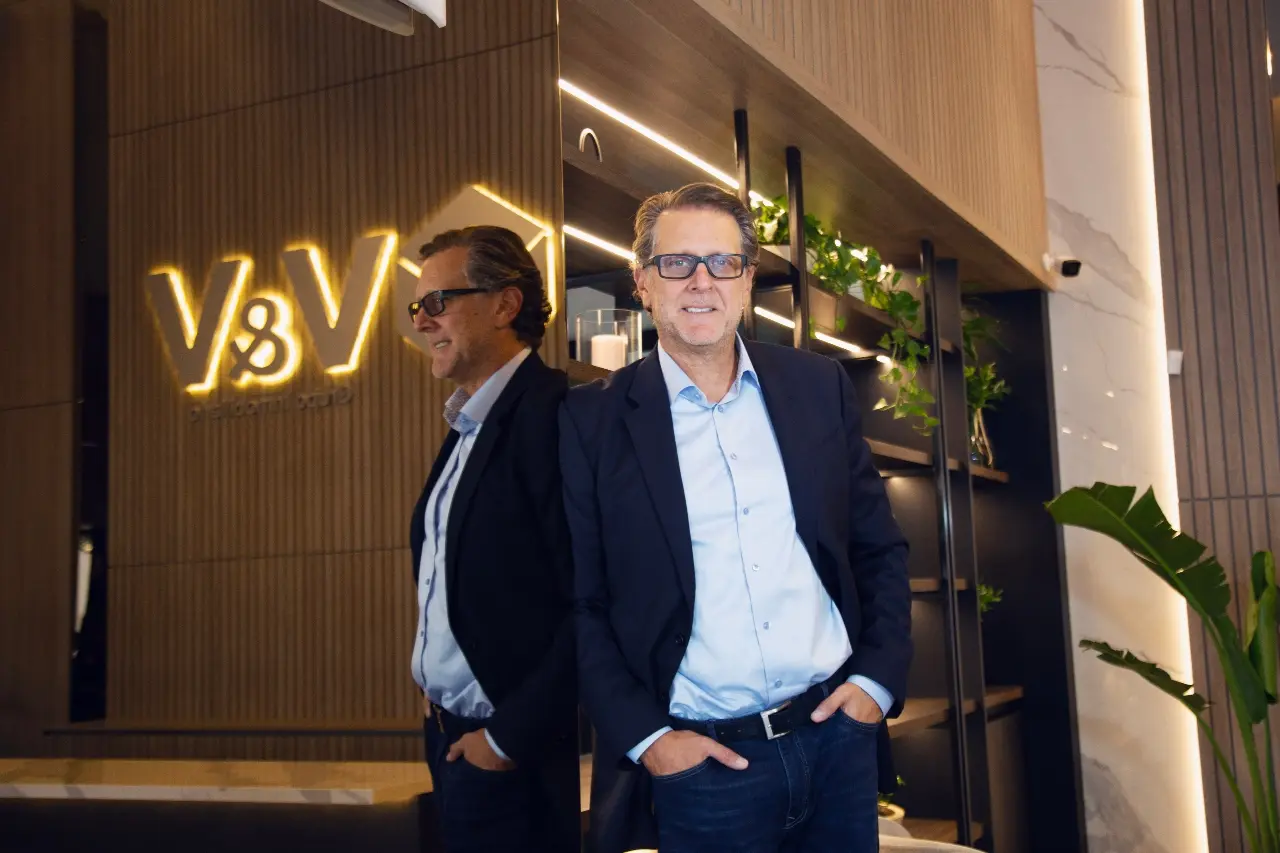
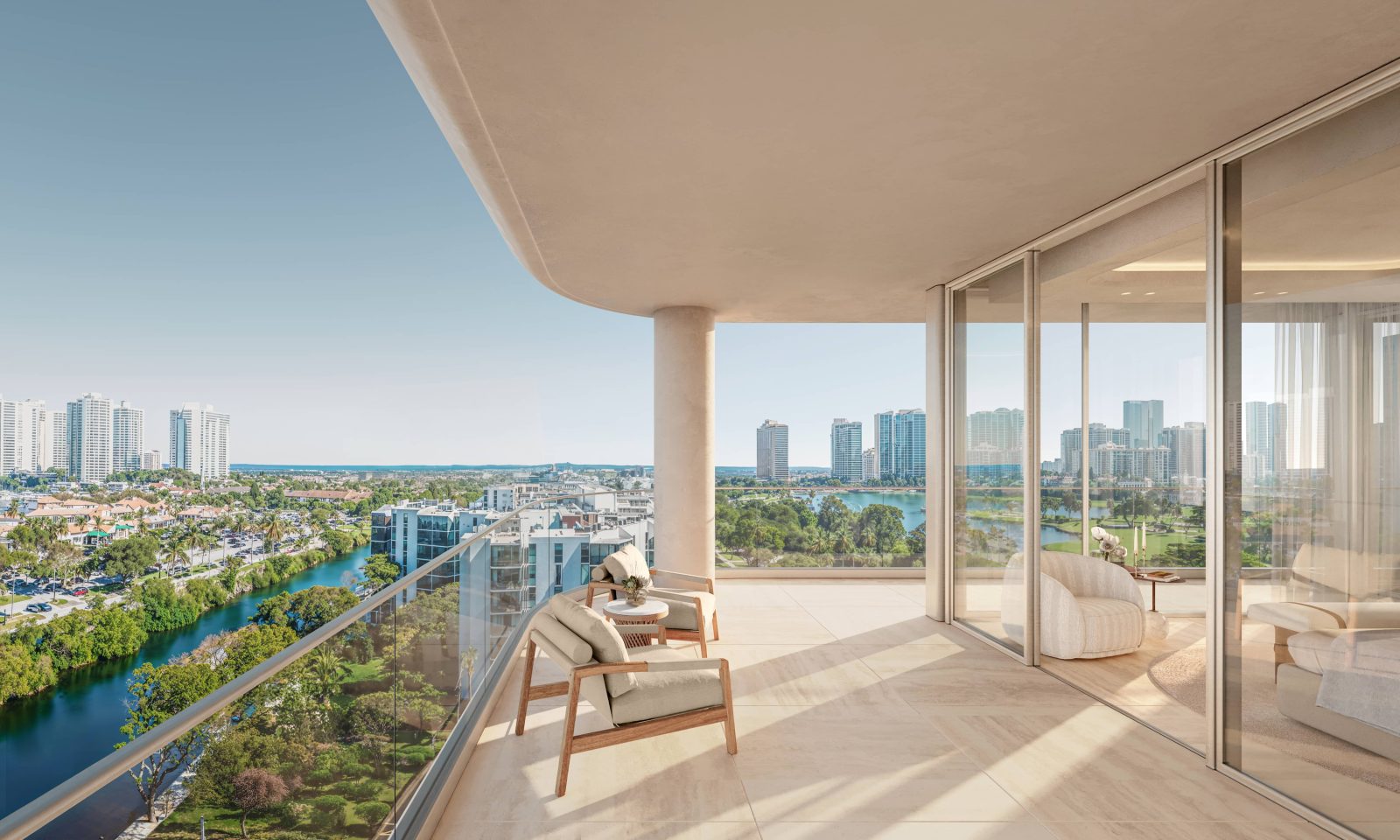
BACK TO NEWS August 25, 2025 The Million-Dollar Bet of V&V Real Estate Group in the United States: From Premium Buildings to a Restaurant Chain With projected revenues this year of 800 million soles, V&V Real Estate Group has focused its business on the mass residential segment, but now seeks to begin building clinics and schools. At the same time, the company is strengthening its position in Florida, where it has launched three projects from a portfolio valued at US$1.6 billion and has entered the restaurant business. The letter V is perhaps the most special one for Víctor Arce, founder and CEO of V&V Real Estate Group. It is not only the first letter of his name, his wife Viviana’s, and his father’s—which explains the name V&V—but also the initial of his three children and of the holding’s companies. “The V was a symbol of good luck. It has always meant ‘victory,’ ‘a good outcome,’” says the executive. Arce created his company in 1996, five years after graduating in business administration, amid rampant inflation and a drought of real estate projects in Peru. Today, he leads a group made up of four companies whose business has crossed national borders: V&V Bravo, the construction arm that began diversification in 2008; V&V Comercial, in charge of performance and commercial intelligence; VYVE Inmobiliaria, a developer of affordable housing through the state program Techo Propio and the Mivivienda Fund; and Vertical Developments, the Florida-based developer founded in June 2021 in partnership with Location3 Investments. This is the first time Arce has given an interview in the 28 years since he bought his first plot of land to build an eight-unit apartment building in Casuarinas Baja. Until now, the managers of the group’s other companies had taken on that role. He now has news to share, reflecting how the business has been repositioned over the last three years and outlining plans for the future. It was precisely in 2021, on the group’s 25th anniversary, that the company took the turn that led to its current structure. That year, they decided to step away from developing homes for the A segment—buildings of 20 to 30 apartments—and move into the “mass” segment, meaning buildings of around 100 units or more. “From 2021 onward, our strategy shifted to that kind of building: 70-square-meter apartments where demand is very strong. We locate them near universities. It’s still Modern Lima, but no longer the top-tier areas,” explains Arce. He notes that what shifted the group’s strategy was Peru’s political and macroeconomic instability, the crisis of confidence during 2021, and capital flight amid the pandemic, the change of government, and the election of former president Pedro Castillo. According to the Ministry of Economy and Finance, some US$20 billion left the country between 2021 and 2022. Photo: Karen Candiotti / Forbes Staff Profitable, but on Standby Today, the group has 14 residential projects in Lima and two in the provinces—both in Piura (one outside the city and another in Sullana, each with 1,000 homes). These projects are part of their social housing portfolio, which the group expects to expand this year with another project outside the capital (1,500 homes, potentially in Chincha or Ica). In Lima, they recently launched a project in Chorrillos benefiting from the Mivivienda Fund’s “green bond” (which rewards water and energy efficiency), and between July and November they plan to launch similar projects in Surquillo and Santa Catalina. According to Arce, the group has decided to freeze investment in offices and hotels—two real estate segments that in 2020 represented 12% and 10% of its Peruvian portfolio, respectively. In offices, the group owns two buildings: Prisma, in Magdalena, and Vértice, in Jesús María. “We located those buildings there precisely to avoid going into the premium segment and later facing demand problems. We did it when the market was strong, and everything was placed,” he says. Currently, they own and lease 50% and 40% of those buildings, respectively, with an annual return of 16%. In the hotel segment, they entered in 2016 with the purchase of land at the corner of La Paz and Ernesto Diez Canseco avenues, alongside a Chilean partner, at a time of “very good rates” and high tourist arrivals. “It was the perfect moment to build a hotel,” Arce recalls. Today, on that land they operate two hotels in Miraflores, managed by Meliá and Marriott. “We had bought another plot on Larco Avenue [for another hotel], but we didn’t go through with it. We had approved plans, but everything fell apart. It cost us a lot to cancel the contract with Marriott. We had to switch to a residential and commercial project. As a strategy, we decided: no more hotels,” he explains, noting that this decision was made in 2021 while accelerating expansion abroad. A New Thesis In June 2021, the group planted its flag in Florida. The group’s partners—Arce, Óscar Bravo, Alonso Bravo, César Paniagua, and Nicolás Labarte—had traveled to the United States to get vaccinated against COVID-19, took the opportunity to explore the market, and decided to open a subsidiary. “At first we rented a very small office,” recalls Arce. To move the business forward, it was key to partner as co-developers with Location3 Investments, a local developer. From this alliance, Vertical Developments was born in 2021. Arce highlights several advantages of this partnership: it not only gives them access to an important network of contacts, but also shortens their learning curve in the U.S. market and, crucially, validates them with banks. “Even if we had built 100 buildings here [in Peru], it doesn’t count on our résumé,” he says, referring to the credit history required for financing in the United States. So far, Vertical Developments owns 12 plots of land in Florida and is developing three condo projects (rental buildings) in Brickell, Coral Gables, and Orlando. For the Orlando project, they partnered with a Mexican investor, and construction is already underway. In total, this pipeline is valued at US$1.6 billion through